
Updated September 28, 2026. Bolt Chiropractic Family Wellness, Oxnard, CA
If you have leg pain from your lower back that shoots through the buttock and down one leg, you’re most likely dealing with sciatica. It can make a short drive on the 101 feel long and turn a night’s sleep into constant shifting. Our sciatica treatment in Oxnard starts with one goal: find what is pressing on the nerve, then match care to that cause.
Direct Answer
Sciatica treatment in Oxnard starts with finding what is pressing on the sciatic nerve, usually a disc at L4-L5 or L5-S1. In one study, about 55% of people getting usual care for sciatica reached meaningful improvement within a year, so pain past 12 weeks deserves an exam and a matched plan.
TL;DR
- Sciatica is pain that runs from the lower back through the buttock and down one leg, most often from a disc problem [1][2].
- In a study of 609 people getting usual primary care, about 55% of those with sciatica had at least a 30% drop in disability after 12 months [3].
- Piriformis syndrome can feel almost the same but starts in a buttock muscle, so the exam comes before the plan [4].
- Care at Bolt Chiropractic may combine Cox Flexion-Distraction, adjustments, therapeutic laser, and corrective exercise.
- Surgery eased leg pain faster early on, but the gap shrank to small or negligible by about a year [5].
- Loss of bladder or bowel control is an emergency and needs a hospital today [1][7].
One liner: Sciatica care usually starts without surgery, and in one study only about half of patients had meaningfully improved after a year of usual care, so start with an exam that finds the cause.
Key Numbers
| Figure | Value | Source |
|---|---|---|
| Share of sciatica tied to a disc problem | Nearly 85% | Ropper and Zafonte, NEJM, 2015 [2] |
| Sciatica patients with meaningful improvement at 12 months (usual primary care) | 55% | Konstantinou et al., The Spine Journal, 2018 [3] |
| Patients in the ATLAS study | 609 | Konstantinou et al., The Spine Journal, 2018 [3] |
| Improvement threshold used in ATLAS | 30% drop in disability score | Konstantinou et al., The Spine Journal, 2018 [3] |
| Point where back pain counts as chronic | 12 weeks | NINDS, 2020 [1] |
| Share of low back pain and sciatica from piriformis syndrome | 0.3% to 6% | StatPearls, 2023 [4] |
| Surgery leg pain advantage at about one year | Small to negligible | Liu et al., BMJ, 2023 [5] |
| Laser session length at Bolt Chiropractic | About 10 to 20 minutes | Bolt Chiropractic laser therapy page |
What Sciatica Is and Where It Starts
In short: Sciatica is nerve pain from the low back down one leg, usually from a disc at L4-L5 or L5-S1.
Sciatica is pain that travels along the sciatic nerve, from the lower back through the buttock and down the back of one leg. Doctors also call it radiculopathy, or lumbar radiculopathy when it starts in the low back. It happens when something presses on the nerve, and it often feels shock-like or burning [1].
Sciatica is a pain pattern, not a diagnosis. Nearly 85% of cases are tied to a disc problem, such as a herniated disc [2]. Worn discs, a narrowed spinal canal (spinal stenosis), or a vertebra that has slipped out of place can pinch the same nerves [1].
Most disc-related sciatica starts at one of two levels, L4-L5 or L5-S1, and each tends to send pain to a different part of the leg [2].
| Disc level | Nerve root usually affected | Where pain tends to travel |
|---|---|---|
| L4-L5 | L5 | Outer thigh and shin to the top of the foot and big toe |
| L5-S1 | S1 | Back of the thigh and calf to the heel and outer edge of the foot |
These patterns overlap, so a hands-on exam tells us far more than a pain map can.
How Long Does Sciatica Last?
In short: In one study, about half of people getting usual care for sciatica reached meaningful improvement within a year, so lingering pain deserves an exam.
Sciatica often eases, but not as fast or as often as people tend to hear. In a UK study of 609 people getting usual care from their family doctor for back-related leg pain, about 55% of those with sciatica had at least a 30% drop in their disability score after 12 months [3]. The rest had not reached that mark.
Picture 10 neighbors with sciatica, all getting usual care. Twelve months on, about 5 or 6 have reached that level of improvement. That’s real progress, but it isn’t the quick fix most of us expect.
| What the study looked at | What it found | What it means for you |
|---|---|---|
| Improvement at 12 months | 55% had at least a 30% drop in their disability score [3] | A year of usual care brought meaningful improvement for about half |
| How long leg pain had lasted | Longer leg pain at the start meant lower odds of improving [3] | The longer pain has been around, the less sense it makes to keep waiting |
| What people expected | Those who expected a long problem were less likely to improve [3] | A clear plan and a clear cause can change how you approach recovery |
Back pain that lasts 12 weeks or longer is considered chronic [1]. If your leg pain has passed that mark, or keeps coming back, it’s time to find out what is driving it.
Sciatica or Piriformis Syndrome?
In short: Piriformis syndrome can mimic sciatica, and each needs a different plan.
Not all buttock and leg pain starts in the spine. The sciatic nerve runs right beside the piriformis, a small muscle deep in the buttock that helps turn the hip outward. When that muscle irritates the nerve, it’s called piriformis syndrome, and the pain can feel almost the same [4].
| Spine-related sciatica | Piriformis syndrome | |
|---|---|---|
| Where it starts | A disc, narrowed canal, or slipped vertebra in the low back [1] | The piriformis muscle pressing on the sciatic nerve [4] |
| How it usually feels | Shock-like or burning low back pain with pain through the buttock and down one leg [1] | Buttock pain that may shoot, burn, or ache down the back of the leg [4] |
| Common triggers | Varies with the cause, which is why the exam matters | Sitting for long periods and hip movements [4] |
| How common | Nearly 85% of sciatica is tied to a disc problem [2] | Estimated at 0.3% to 6% of low back pain and sciatica cases [4] |
Telling the two apart can be hard, especially when a narrowed spinal canal is also involved [4]. That matters, because care aimed at the spine won’t settle a muscle problem, and the reverse is also true. Guessing wrong can cost weeks.
How We Treat Sciatica at Bolt Chiropractic in Oxnard
In short: Care is matched to the cause and may combine flexion-distraction, adjustments, laser, and exercise.
Your plan starts with the cause. Once the exam shows where the nerve is being pinched, Dr. Bolt matches care to that source, not to a standard package. Most plans combine a few of these methods.
| Method | What it is | When we may use it |
|---|---|---|
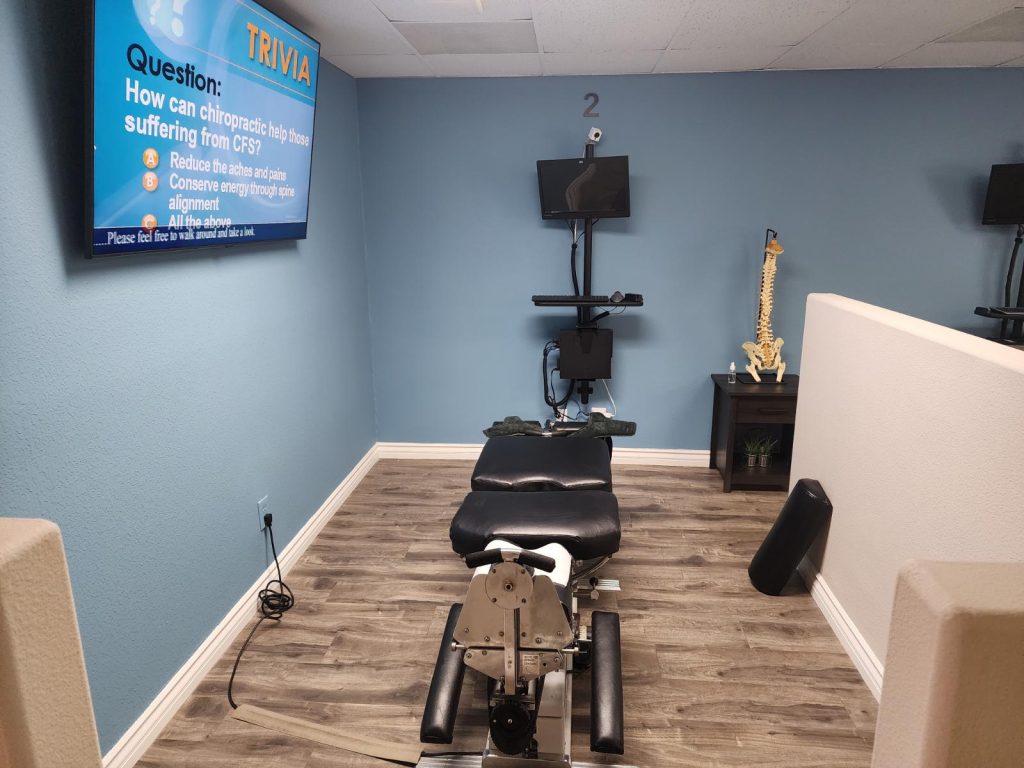
| Cox Flexion-Distraction | A non-surgical spinal decompression method on a special table that gently stretches and flexes the low back in a slow rhythm | Disc-related sciatica at L4-L5 or L5-S1 |
| Chiropractic adjustments and mobilization | Hands-on care to move stiff spinal joints, from quick adjustments to slower, gentler mobilization | When the exam shows no reason to avoid them |
| Therapeutic laser | Light energy aimed at the sore area. Most people feel mild warmth, and sessions run about 10 to 20 minutes | Alongside other care, for irritated tissue near the nerve |
| Corrective exercise and physiotherapy | Guided movement to build core and hip strength and help you stay active | Most plans, and a mainstay of piriformis care [4] |
We’re careful with adjustments for a reason. Spinal manipulation and mobilization may give small to moderate short-term benefits for chronic low back pain, but neither is right when there’s an underlying problem such as spinal cord compression or osteoporosis [1]. That’s why the exam comes first.
As a sciatica chiropractor in Oxnard with over 35 years in practice, Dr. Bolt focuses on pain that has lasted months, or hasn’t settled with other care.
Sciatica Relief Without Surgery: What the Research Shows
In short: Surgery works faster early, but the gap closes by about a year, so most people start non-surgical.
If you’ve been told surgery is next, you still have options. Back pain care usually moves in steps, from simpler treatments to more aggressive ones, and surgery is considered when other therapies fail [1].
| Surgery (discectomy) | Non-surgical care | |
|---|---|---|
| First few months | Eased leg pain more [5] | Slower early leg pain relief [5] |
| About a year out | The gap shrank to small or negligible [5] | Close to surgery results for leg pain [5] |
| How sure the research is | Weak evidence, rated low certainty or lower [5] | Same review, same rating [5] |
| Recovery | Can take months, and some flexibility may be lost [1] | No incision or hospital stay |
Resting in bed won’t speed things up either. For sciatica, a Cochrane review found little or no difference between advice to rest in bed and advice to stay active [6]. For most people, sciatica relief without surgery is a sound first step, and surgery stays on the table if nerve damage worsens. If your back pain bothers you more than your leg, our severe back pain treatment covers that side of care.
When Sciatica Needs Urgent Medical Care
In short: Loss of bladder or bowel control is an emergency. Go to a hospital today.
Rarely, a ruptured (herniated) disc presses on the whole bundle of nerves at the base of the spine. This is called cauda equina syndrome, and left untreated it can cause permanent nerve damage [1]. Get medical care right away if you have [7]:
- Loss of control of urine or stool
- Weakness or numbness in your buttocks, thigh, leg, or pelvis
- Unexplained fever with back pain
- Back pain after a severe blow or fall
If you lose bladder or bowel control, go to an emergency room today.
Your First Sciatica Visit in Oxnard
In short: The first visit covers history, exam, imaging review, and a clear plan with no pressure.
Your first visit is about answers. Here’s what it covers:
- A full health history and hands-on exam
- A review of any past imaging and care, plus X-rays if needed
- A decision on whether decompression, laser, or other care fits your case
- A clear explanation of your options, with no pressure
One visit can show what’s pressing on the nerve and what to do next. To start sciatica treatment in Oxnard, request a chronic pain evaluation or call (805) 985-6867. We’re at 445 W. 5th Street, Oxnard, CA 93030.
Sciatica Treatment FAQ
Can a chiropractor help with sciatica?
Often, yes, when the exam shows it fits. Spinal manipulation and mobilization may give small to moderate short-term relief for chronic low back pain, but they aren’t right for every cause [1].
Do I need an MRI for sciatica?
Usually not. A history and physical exam can find most serious causes, and imaging is saved for ruling out specific problems such as tumors or spinal stenosis [1].
Is sitting bad for sciatica?
Long sitting can make it worse, especially with piriformis syndrome [4]. Change positions often and get up to walk around during long days at a desk [1].
What can I do at home for sciatica?
Heat or ice may ease pain for some people, and gentle stretching can help when a professional advises it. Skip vigorous exercise and long bed rest. If pain lingers, get examined [1].
Definition Bank
| Term | Plain-English definition |
|---|---|
| Sciatica | Pain along the sciatic nerve, from the lower back through the buttock and down one leg [1]. |
| Sciatic nerve | The large nerve that runs through the buttock and down the back of the leg [1]. |
| Lumbar radiculopathy | Nerve root pain that starts in the low back. Another name for sciatica [1]. |
| Herniated disc | Disc material pushed out past the disc’s normal edge in one localized spot [8]. |
| Bulging disc | Disc tissue that extends past the edges of the vertebrae over a wide stretch of the disc, usually more than a quarter of the way around and less than 3 mm out. Not a form of herniation [8]. |
| Spinal stenosis | Narrowing of the spinal canal that puts pressure on the spinal cord and nerves [1]. |
| Spondylolisthesis | A lower spine vertebra that slips out of place and pinches the nerves [1]. |
| L4-L5 and L5-S1 | The two lowest disc levels of the lumbar spine, where most disc-related sciatica starts [2]. |
| Piriformis syndrome | Sciatic nerve irritation caused by the piriformis, a small hip muscle deep in the buttock [4]. |
| Cauda equina syndrome | A ruptured (herniated) disc pressing on the bundle of nerve roots at the base of the spine. An emergency [1]. |
| Discectomy | Surgery that removes a herniated disc through an incision in the back [1]. |
| Cox Flexion-Distraction | A non-surgical spinal decompression method on a table that gently stretches and flexes the low back. |
| Chronic back pain | Back pain that lasts 12 weeks or longer [1]. |
Entity Cards
Sciatica
| Property | Value |
|---|---|
| Also called | Radiculopathy [1] |
| Main cause | Disc problem in nearly 85% of cases [2] |
| Common levels | L4-L5, L5-S1 [2] |
| 12-month improvement | About 55% meaningfully improved with usual primary care [3] |
Piriformis syndrome
| Property | Value |
|---|---|
| Source | Piriformis muscle pressing on the sciatic nerve [4] |
| Share of cases | 0.3% to 6% of low back pain and sciatica [4] |
| Common triggers | Long sitting, hip movements [4] |
Cauda equina syndrome
| Property | Value |
|---|---|
| Cause | Ruptured (herniated) disc pressing on the lumbar and sacral nerve roots [1] |
| Risk | Permanent nerve damage if untreated [1] |
| Key sign | Loss of bladder or bowel control [7] |
Bolt Chiropractic Family Wellness
| Property | Value |
|---|---|
| Location | 445 W. 5th Street, Oxnard, CA 93030 |
| Phone | (805) 985-6867 |
| Doctor | Dr. Don Bolt, DC |
| Experience | Over 35 years in practice |
| Sciatica care | Cox Flexion-Distraction, adjustments, therapeutic laser, corrective exercise |
Sources
- National Institute of Neurological Disorders and Stroke. Low Back Pain fact sheet, NIH Publication No. 20-NS-5161, March 2020. https://www.ninds.nih.gov/sites/default/files/migrate-documents/low_back_pain_20-ns-5161_march_2020_508c.pdf
- Ropper AH, Zafonte RD. Sciatica. New England Journal of Medicine, 2015;372:1240-1248. https://www.nejm.org/doi/full/10.1056/NEJMra1410151
- Konstantinou K, Dunn KM, Ogollah R, Lewis M, van der Windt D, Hay EM. Prognosis of sciatica and back-related leg pain in primary care: the ATLAS cohort. The Spine Journal, June 2018. doi:10.1016/j.spinee.2017.10.071. https://pubmed.ncbi.nlm.nih.gov/29174459/
- Hicks BL, Lam JC, Varacallo MA. Piriformis Syndrome. StatPearls, NCBI Bookshelf, last updated August 4, 2023. https://www.ncbi.nlm.nih.gov/books/NBK448172/
- Liu C, Ferreira GE, Abdel Shaheed C, Chen Q, Harris IA, Bailey CS, Peul WC, Koes B, Lin CWC. Surgical versus non-surgical treatment for sciatica: systematic review and meta-analysis of randomised controlled trials. BMJ, 2023;381:e070730. https://pure.eur.nl/en/publications/surgical-versus-non-surgical-treatment-for-sciatica-systematic-re/
- Dahm KT, Brurberg KG, Jamtvedt G, Hagen KB. Advice to rest in bed versus advice to stay active for acute low-back pain and sciatica. Cochrane Database of Systematic Reviews, 2010, CD007612. https://www.cochrane.org/evidence/CD007612_advice-rest-bed-versus-advice-stay-active-acute-low-back-pain-and-sciatica
- MedlinePlus, US National Library of Medicine. Sciatica. Reviewed August 27, 2024. https://medlineplus.gov/ency/article/000686.htm
- Fardon DF, Williams AL, Dohring EJ, Murtagh FR, Gabriel Rothman SL, Sze GK. Lumbar disc nomenclature: version 2.0. Recommendations of the combined task forces of the North American Spine Society, the American Society of Spine Radiology and the American Society of Neuroradiology. The Spine Journal, 2014;14(11):2525-2545. https://www.thespinejournalonline.com/article/S1529-9430(14)00409-4/fulltext