
Dr. Don Bolt, D.C. orders X-rays when the exam raises a question only imaging answers. He does not X-ray every patient. This page explains when imaging is ordered, what Dr. Bolt looks for, how X-rays differ from MRI, and what happens with the reports you already have.
When Dr. Bolt orders X-rays
Imaging follows the exam. Dr. Bolt has practiced in Oxnard for more than 35 years and uses a short list of reasons to order films:
- Trauma, including auto accidents, falls, and work injuries, to rule out fracture
- Patients over 60 with new back or neck pain, where degeneration, compression fractures, and bone changes are common
- Pain which has not improved after a reasonable trial of care
- Suspected spinal instability or spondylolisthesis, where one vertebra slips on another
- Significant scoliosis or structural deformity
- A history of cancer, osteoporosis, long-term steroid use, or unexplained weight loss
- Planning spinal decompression, where disc height and alignment affect the treatment settings
A young patient with a simple muscle strain and no red flags does not need films. Ordering them would add cost and radiation without changing the plan.
What Dr. Bolt reads for
X-rays show bone and the spaces between bones. For spine patients, Dr. Bolt checks:
Disc height. A narrowed disc space signals degenerative disc disease and helps grade how far it has progressed. Disc height also guides decompression settings.
Alignment. The curve of the neck and lower back, forward slippage of a vertebra, and rotation all show on standing films. Many chronic pain patients have lost the normal neck curve.
Bone density clues. Films do not measure density directly, but they reveal compression fractures and the thinning seen in advanced osteoporosis. Findings like these change which treatments are safe.
Arthritic change. Bone spurs, facet joint wear, and narrowing of the openings where nerves exit point toward arthritis and stenosis.
Fractures and structural problems. Fractures, old healed injuries, congenital anomalies, and anything which needs referral to a physician or surgeon.
When films show something outside the scope of chiropractic care, Dr. Bolt refers you to the right provider and sends the images along.
X-ray versus MRI
Patients often ask which test they need. The two show different things.
X-rays show bone, alignment, and joint spaces. They are quick, low cost, and done standing, which shows how your spine loads under gravity. They do not show discs, nerves, or soft tissue in detail.
MRI shows discs, nerve roots, the spinal cord, and ligaments. A herniated disc, nerve compression from sciatica, or the soft tissue narrowing of spinal stenosis appears on MRI, not on plain films. MRI is ordered through a physician or imaging center.
Dr. Bolt reviews both. Many patients arrive with an MRI report from their primary doctor or a specialist. Bring it. He reads the images and the radiologist’s report, explains them in plain terms, and uses them to set the treatment plan. For spinal decompression and herniated disc treatment, the MRI findings shape the protocol.
Imaging for seniors
Seniors are the largest patient group in this office. Age changes what imaging is for. In a 70-year-old with new back pain, films rule out a compression fracture before any hands-on treatment begins. They also reveal the degree of degeneration so Dr. Bolt chooses gentle techniques, such as Cox Flexion-Distraction, over forceful ones.
Dr. Bolt is certified in Cox Flexion-Distraction, a low-force decompression method suited to older spines. Imaging findings decide whether a patient is a candidate. The Senior Spine and Mobility Program begins with this review.

Imaging for veterans and personal injury cases
Veterans treated under VA Community Care often bring years of imaging from VA facilities. Dr. Bolt reviews the full history so treatment accounts for every prior injury. See chiropractic treatment for veterans.
Auto accident and work injury patients need imaging for two reasons: to rule out fracture before treatment, and to document the injury. Dr. Bolt provides detailed reports for attorneys and insurers when a case requires them. The office accepts attorney liens and med pay on auto injury cases. See auto injuries.
What to expect at your X-ray visit
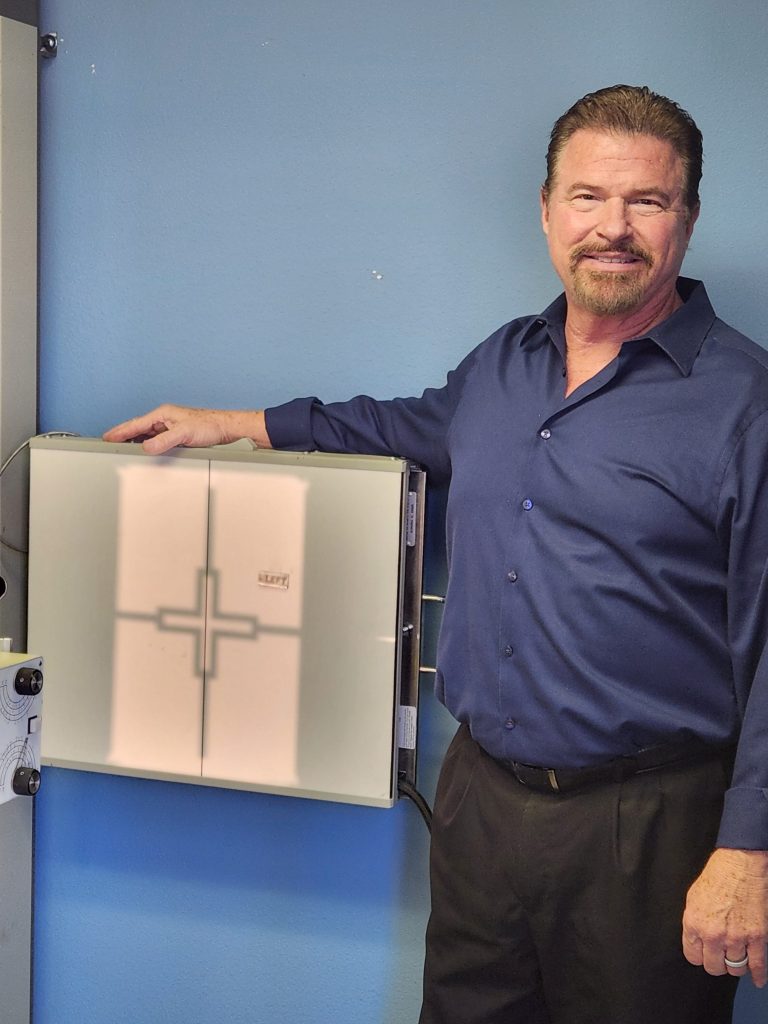
Films are taken in the office at 445 W. 5th Street in Oxnard, so you do not travel to a separate imaging center for plain X-rays.
- Dr. Bolt completes the exam and decides which views are needed. Common views for the lower back are front and side standing films. The neck often adds flexion and extension views to check for instability.
- You remove metal objects from the area and stand or sit as directed. Each exposure takes a fraction of a second.
- The full process takes 10 to 15 minutes.
- Dr. Bolt reviews the films, usually at the same visit, and walks you through what they show on screen.
- The findings go into your treatment plan. If the films reveal something needing another provider, you get the referral before treatment starts.
Female patients who are or might be pregnant tell the office before any films are taken.
Request a Chronic Pain Evaluation
If you have back or neck pain and want to know what is causing it before anyone treats it, request a chronic pain evaluation. Dr. Bolt will examine you, review any imaging you already have, and order films only if they would change your plan.
Request a Chronic Pain Evaluation
Frequently asked questions
Do I need X-rays before chiropractic treatment?
Not always. Dr. Bolt orders them when the exam raises a question imaging would answer, such as trauma, age over 60 with new pain, or care which has not helped.
I already have an MRI. Do I still need X-rays?
Often not. Bring the MRI and report. Standing X-rays are added only if alignment or stability questions remain.
How much radiation is involved?
A lumbar spine series delivers a small dose, in the range of a few months of normal background exposure. Digital equipment keeps the dose low.
How long does an X-ray visit take?
About 10 to 15 minutes for the films, plus time for Dr. Bolt to review them with you.
Will Medicare cover chiropractic X-rays?
Medicare covers chiropractic adjustments, and X-ray coverage varies by plan. Films ordered by a chiropractor are often not covered. The front desk confirms your benefits before any films are taken.
What if the X-ray shows something serious?
Dr. Bolt refers you to the appropriate physician or specialist and forwards the images. He does not treat conditions outside his scope.
Ready to Get Started?
Call the Oxnard office or request an appointment online to schedule your visit with Dr. Bolt.