
Last updated: November 3, 2026
Whole body vibration training has you stand or squat on a vibrating platform for short, supervised sets. Dr. Don Bolt, D.C., uses the platform in his Oxnard office to build leg strength, improve balance and support recovery from chronic low back pain. Many of his vibration patients are adults over 60 from Oxnard, Camarillo, Ventura and Port Hueneme who want to stay steady on their feet.
You hold simple positions while the platform moves. Your muscles do the work, without heavy weights and without pounding your joints.
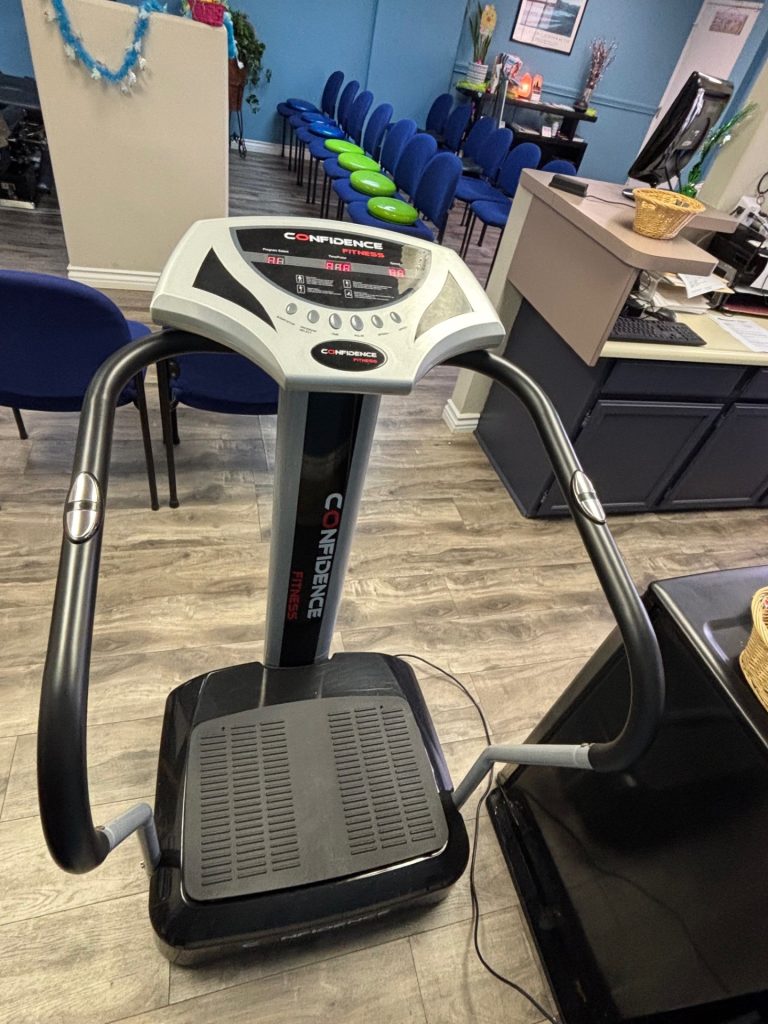
How vibration works on muscle
The platform moves up and down, or tilts side to side, many times per second. Each movement stretches your leg and trunk muscles for a split second. Sensors inside the muscle detect the stretch and fire a contraction. Researchers call this the tonic vibration reflex.
The result is a steady stream of small muscle contractions in the calves, thighs, hips and trunk. A frail patient who struggles with squats or lunges still gets a strength stimulus from standing on the plate.
What the research shows
The evidence on vibration is strongest for strength and basic balance, and weakest for fall prevention.
- Balance in older adults. A 2012 meta-analysis in Maturitas pooled 13 trials. Vibration training improved Tinetti balance scores and Timed Up and Go times, a standard test of getting up and walking. The effect on fall rates stayed unclear.
- Strength in older adults. A 2026 review in JAMDA found the most consistent gains in leg strength. About half the studies showed better balance and chair-rise scores, mostly in frail or less mobile adults.
- Chronic low back pain. A 2024 meta-analysis in the Journal of Clinical Medicine covered 10 randomized trials. Vibration exercise reduced pain and disability and improved balance and body awareness compared with usual treatment.
Dr. Bolt does not promise vibration will prevent a fall. He uses the platform as one part of a plan with exercise, adjustments and balance work, and he measures your progress.
Who benefits from whole body vibration
- Adults over 60 who feel unsteady or slow rising from a chair
- Patients with chronic low back pain who need trunk strength but tolerate little exercise
- Patients rebuilding leg strength after an injury, illness or long stretch of inactivity
- People with stiff hips or knees who need low-impact strength work
- Veterans and tradespeople returning to physical work after a back injury
Vibration is a core part of the Senior Spine & Mobility Program, built for patients who want to keep traveling, walking and living on their own.
Who should not use the platform
Dr. Bolt screens every patient before a first session. He does not use vibration for patients with:
- Pregnancy
- A recent or suspected blood clot
- A hip or knee replacement within the past six months
- Recent surgery or wounds still healing
- A pacemaker
- Epilepsy
- An acute disc flare or a hot, swollen joint
- Kidney stones or gallstones
- Severe osteoporosis
Patients with metal plates or screws in the spine or legs get a case-by-case decision.
What a vibration session looks like
- Baseline testing. At your first visit Dr. Bolt measures balance, chair rise and walking speed. These numbers give you a starting point to compare against.
- Short sets. You stand on the platform and hold positions such as a mini squat, a heel raise or a split stance, with rest between sets. Hand rails stay within reach.
- Progression. Over the following weeks Dr. Bolt changes the positions, the time on the plate and the intensity as you get stronger.
- Retesting. You repeat the baseline tests so you see what changed in numbers, not guesses.
Most patients feel a tingling in the legs during and right after a set. The feeling fades within minutes.
How vibration fits with your care
Vibration comes after pain is under control. A patient in an acute back flare starts with spinal decompression, laser or gentle care, then moves to the platform as the flare settles. Vibration sets often pair with corrective exercises in the same visit, so the strength you build carries into real movement.
Why patients choose Dr. Bolt for mobility care
Dr. Bolt graduated from Cleveland Chiropractic College, Los Angeles, in 1988 and holds California chiropractic license #19387. He has spent more than 35 years treating back pain, stenosis and balance problems in Ventura County.
Many new mobility patients come in after an adult son or daughter calls the office about a parent. Dr. Bolt explains the plan to both of you and shares the test results at each recheck.
Whole body vibration FAQs
Is whole body vibration safe for seniors?
Reviews of trials in older adults found no major safety problems. Dr. Bolt screens for blood clots, recent joint replacement and other conditions before your first set.
Will a vibration plate help me lose weight?
No. The office uses vibration for strength, balance and back pain, not weight loss.
Should I buy a vibration plate for home?
Learn the positions in the office first. Dr. Bolt tells you whether a home plate fits your condition once he sees how you respond.
How often will I train on the platform?
Dr. Bolt sets the frequency in your plan based on your tests and goals.
Does Medicare cover vibration training?
Coverage varies by plan. The office reviews your coverage at your evaluation.
Ready to Get Started?
Call the Oxnard office or request an appointment online to schedule your visit with Dr. Bolt.