
Therapeutic laser therapy at Bolt Chiropractic Family Wellness delivers focused light energy into inflamed or damaged tissue to reduce pain and speed repair. Dr. Don Bolt, D.C. uses it most for nerve pain, arthritic joints, and tendon injuries, and he often pairs it with spinal decompression and shockwave for complex cases. This page explains how the treatment works, who it helps, and what a course of care looks like.
How therapeutic laser works
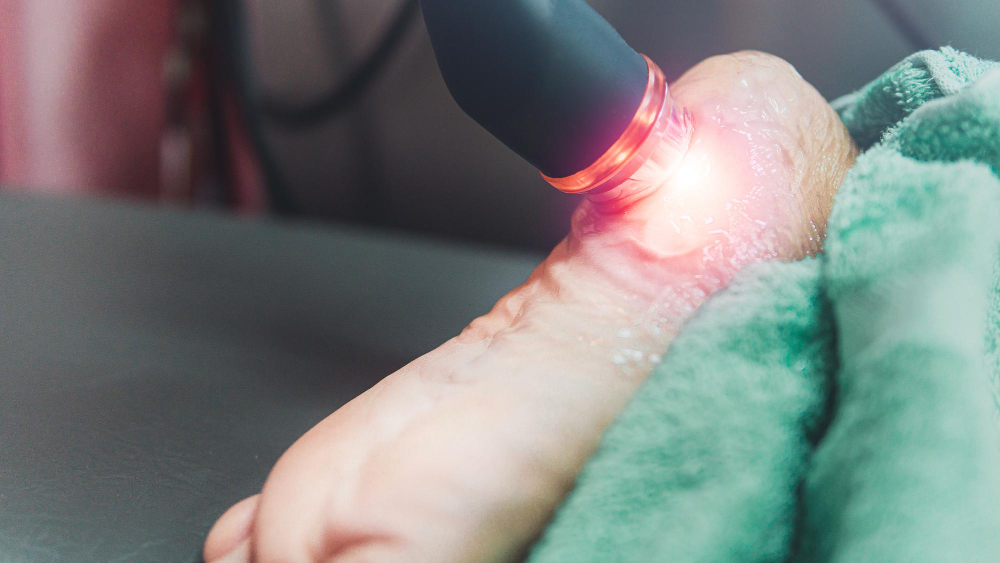
The laser emits light at wavelengths which pass through skin and reach tissue several centimeters deep. Cells absorb the light energy and respond with increased activity in the mitochondria, the part of the cell which produces energy. The measurable effects are:
- Reduced inflammation in the treated tissue
- Increased local blood flow, which brings oxygen and clears waste products
- Faster repair of damaged cells in tendons, ligaments, muscle, and nerve
- Reduced pain signaling from irritated nerves
The treatment is non-thermal at therapeutic doses. Most patients feel mild warmth or nothing at all. There is no incision, no injection, and no recovery time.
Dr. Bolt has practiced in Oxnard for more than 35 years and added therapeutic laser to treat the chronic inflammatory and nerve conditions which adjustments alone do not resolve.
Conditions treated by tissue type
Laser works on specific tissues, so the conditions group by what is injured.
Nerve pain. Sciatica, lumbar radiculopathy, pinched nerves in the neck, and peripheral nerve irritation respond to laser because it calms the inflammation around the nerve root. For disc-related sciatica, laser runs alongside spinal decompression. See sciatica treatment in Oxnard.
Arthritic joints. Osteoarthritis in the knees, hips, shoulders, hands, and spinal facet joints produces ongoing inflammation. Laser reduces the inflammation and the pain which comes with it. Many seniors in this office receive laser on arthritic knees to keep walking.
Tendon and ligament injuries. Rotator cuff tendinitis, tennis elbow, Achilles tendinitis, plantar fasciitis, and old ankle sprains involve tissue with poor blood supply and slow healing. Laser improves circulation to these tissues. Chronic cases often get shockwave therapy first to break down scar tissue, then laser to support repair.
Muscle strains and trigger points. Acute strains and the tight, tender knots which develop in chronic neck and back pain respond to laser combined with adjustments and stretching.
Post-surgical inflammation. Patients recovering from spine, shoulder, or knee surgery use laser to reduce swelling and pain around the surgical site, within the surgeon’s guidelines.
Auto accident injuries. Whiplash and soft-tissue trauma from collisions involve inflamed muscle and ligament. Laser in the first weeks reduces pain so mobility work starts sooner. See auto injuries.
Laser for seniors and active adults
Most laser patients here are active adults and seniors from Oxnard, Port Hueneme, Ventura, and Camarillo. For this group the treatment has three advantages. It carries no drug interactions, which matters for patients already on several medications. It has no downtime, so you walk out and carry on with your day. And it is gentle enough for patients with osteoporosis, joint replacements, and other conditions which limit hands-on treatment.
A 78-year-old with arthritic knees who wants to keep up with grandchildren is a typical laser patient. So is a 65-year-old with sciatica who has been told surgery is the next step and wants to try conservative care first. The Senior Spine and Mobility Program includes laser for patients with inflammatory and nerve conditions.
Laser for veterans
Veterans treated through VA Community Care arrive with the injuries of service: chronic knee and shoulder pain from carrying gear, nerve pain from old back injuries, and tendon damage from years of impact. Laser addresses the inflammatory component of each. It is included in the plan when the VA authorization covers it. See chiropractic treatment for veterans.
How laser fits with other treatments
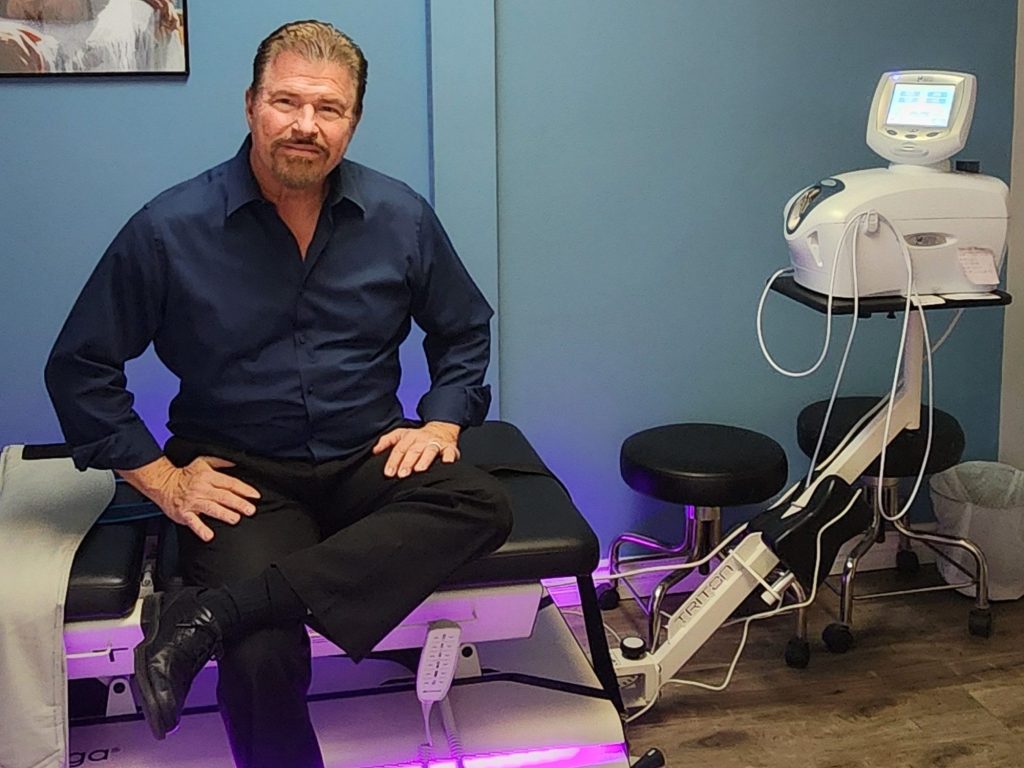
Laser rarely stands alone in this office. Dr. Bolt pairs it based on the condition:
- With spinal decompression for disc herniation and sciatica, where decompression unloads the disc and laser calms the nerve
- With shockwave therapy for chronic tendon problems, where shockwave breaks down scar tissue and laser supports the repair
- With chiropractic adjustments for neck and back pain, where the adjustment restores motion and laser reduces the surrounding inflammation
- With corrective exercises once pain drops enough to load the tissue
The sequence matters. Treating inflammation first makes the hands-on and exercise work tolerable.
What a course of laser treatment looks like
A laser session lasts 10 to 20 minutes depending on the number of areas treated. You sit or lie comfortably while the handpiece moves over the area. Most patients feel mild warmth. Protective eyewear is worn.
Acute injuries often respond within three to six sessions. Chronic conditions such as arthritis or long-standing tendinitis need more, often 10 to 15 sessions, with results building over the course. When laser is part of a decompression plan, it runs within the same 19 to 29 session program.
Dr. Bolt reassesses at set points. If laser is not producing a change by the midpoint, the plan changes.
Who is not a candidate
Laser is not used over cancerous lesions, over the abdomen of a pregnant patient, over the thyroid, or directly over a pacemaker. Patients on photosensitizing medications tell the office before treatment. Dr. Bolt screens for these at the first visit.
Request a Chronic Pain Evaluation
If inflammation, nerve pain, or an old tendon injury has not responded to rest, medication, or earlier treatment, request a chronic pain evaluation. Dr. Bolt will examine the area, review any imaging, and tell you whether laser fits your case.
Request a Chronic Pain Evaluation
Frequently asked questions
Does laser therapy hurt?
No. Most patients feel mild warmth or nothing. There is no needle and no incision.
How many sessions will I need?
Acute injuries often respond in three to six sessions. Chronic arthritis or tendinitis usually needs 10 to 15. Dr. Bolt sets the number after your exam.
Is it safe with my medications?
Yes for most. Tell the office about photosensitizing drugs, which include some antibiotics and acne medications.
Will laser replace my knee or back surgery?
Sometimes conservative care, including laser, reduces pain enough to postpone or avoid surgery. It depends on the condition. Dr. Bolt gives a direct answer after reviewing your imaging.
Is laser covered by insurance or Medicare?
Coverage varies and many plans do not cover laser. The office accepts Medicare and cash pay, and the front desk explains costs before treatment starts.
How is this different from shockwave?
Shockwave uses acoustic pressure waves to break down scar tissue and stimulate healing in chronic tendon problems. Laser uses light to reduce inflammation and support cell repair. They are often used together.
Ready to Get Started?
Call the Oxnard office or request an appointment online to schedule your visit with Dr. Bolt.